
What Is The Difference Between Smatv And IPTV best guide 2025
In the evolving landscape of television distribution, understanding the differences between SMATV and IPTV systems is important for making informed decisions. While both aim to deliver television content, they operate on fundamentally different principles and offer distinct capabilities. This guide explores these distinctions, helping to clarify which technology might be more suitable for various needs, with a special look at how solutions like GOLD IPTV fit into the modern media environment.
Key Takeaways
- SMATV (Satellite Master Antenna TV) systems distribute television channels via coaxial cables, a technology that has been around for a long time.
- IPTV (Internet Protocol Television) uses internet protocol to deliver TV content over networks, offering more flexibility and advanced features compared to traditional SMATV.
- Key differences lie in picture quality, channel capacity, and interactivity; IPTV generally provides higher quality, more channels, and two-way communication.
- IPTV offers benefits like an improved user experience and a unified communication infrastructure, making it a forward-looking choice for many applications.
- While SMATV can be cost-effective for existing setups or simple needs, IPTV, especially platforms like GOLD IPTV, represents the future of television delivery with greater potential for customization and advanced services.
Understanding SMATV Systems
SMATV, which stands for Satellite Master Antenna Television, is a system designed to receive and distribute television signals to a group of users within a specific area, like an apartment building, hotel, or a similar housing complex. It works by using one or more high-quality antennas, often placed centrally, to pick up satellite television broadcasts. In addition to satellite signals, SMATV systems can also incorporate antennas for receiving local terrestrial channels broadcast over UHF and VHF frequencies. These combined signals are then sent out to individual users through a dedicated cable network.
The Basics of Satellite Master Antenna TV
At its core, SMATV is about consolidating the reception of television signals. Instead of each household needing its own satellite dish, a single, well-positioned dish (or multiple dishes for different satellite positions) captures the signals. These signals are then processed and amplified at a central point, known as the headend. From there, a network of coaxial cables distributes the channels to every connected television. This setup is common in multi-dwelling units where installing individual dishes for every resident would be impractical or impossible.
How SMATV Distributes Television Channels
The distribution of channels in an SMATV system typically involves modulating the received satellite and terrestrial signals onto different frequency bands. These modulated signals are then sent through a coaxial cable network. Think of it like a radio system, but for TV channels. Each channel is assigned a specific frequency, and the cables carry all these frequencies to the various outlets. The television set then tunes into the desired channel by selecting its specific frequency. This method allows for a wide array of channels to be delivered over a single cable.
Limitations of Traditional SMATV
While SMATV has been a reliable solution for many years, it does have its drawbacks. One significant limitation is its susceptibility to signal degradation. Because it relies on radio waves and a physical cable infrastructure, the signal can be affected by interference, cable quality, and the distance from the headend. This can lead to issues like ghosting, snowy pictures, or a general drop in picture quality, especially in older or poorly maintained systems. Furthermore, expanding the number of channels or upgrading the system can be complex and costly, often requiring significant changes to the existing cabling.
SMATV systems are built on older technology that can struggle with signal integrity over long cable runs or when many channels are involved. This makes them less adaptable to the high-definition and advanced features that modern viewers expect.
Exploring the World of IPTV
Internet Protocol Television, or IPTV, represents a significant shift in how television content is delivered and consumed. Instead of relying on traditional broadcast methods like satellite or cable, IPTV utilizes the internet protocol to send television signals. This means your TV programs travel over the same networks that handle your internet browsing and email. This IP-based approach is widely considered the future of television delivery.
What is Internet Protocol Television?
At its core, IPTV is a system where television services are delivered using the Internet Protocol suite over a packet-switched network, such as the Internet. Unlike traditional broadcasting, which sends signals over the air or through coaxial cables, IPTV sends video and audio data in packets across an IP network. This allows for a more flexible and interactive viewing experience. Content can be delivered live, like traditional TV, or on-demand, meaning viewers can watch what they want, when they want.
Cloud-Based vs. LAN-Based IPTV
IPTV systems can be broadly categorized into two main types based on their network infrastructure: cloud-based and LAN-based.
- Cloud-Based IPTV: This model hosts content on remote servers, accessible via the internet. It’s a good option for smaller setups or those with reliable, high-speed internet connections. The content is streamed directly from the cloud to the end-user.
- LAN-Based IPTV: This system operates on a private, local area network (LAN). It often involves dedicated infrastructure within a building or campus, offering more control over the network and potentially higher reliability for internal distribution. This is common in hotels or large complexes.
The Future of Television Delivery
IPTV is positioned as a forward-thinking technology. Its ability to integrate with other IP-based services and support advanced features makes it a compelling choice for modern entertainment and information delivery. As internet infrastructure continues to improve globally, IPTV is expected to play an even larger role in how we access television content, offering higher quality and more personalized experiences.
The shift to IPTV is driven by its inherent flexibility and the potential for richer user interactions. It moves beyond passive viewing to a more dynamic engagement with media content.
Here’s a quick look at some advantages:
- Higher Picture Quality: Well-implemented IPTV systems can deliver superior picture quality with less susceptibility to interference compared to older analog systems.
- Unified Communication: IPTV can be integrated into a broader IP-based network, allowing for unified communication and control across various devices and services.
- Diagnostics and Control: IPTV systems often provide better tools for monitoring, diagnostics, and remote control, making troubleshooting and management more efficient.
Key Differences Between SMATV and IPTV
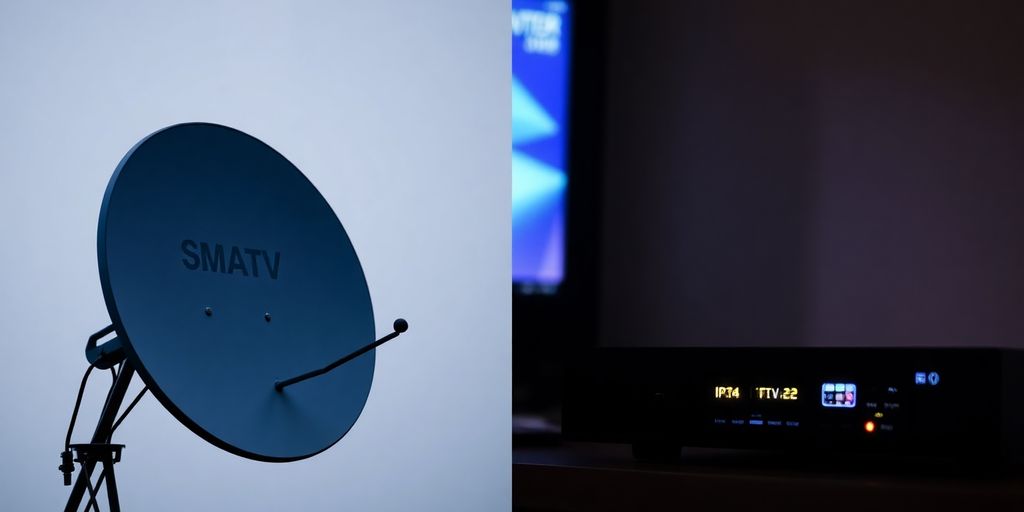
When looking at how television channels are delivered, SMATV and IPTV systems have some pretty big differences. It’s not just about how the signal gets to your TV; it’s about the whole experience and what’s possible.
Picture Quality and Signal Integrity
One of the most noticeable differences is how good the picture looks. Traditional SMATV systems, which often rely on coaxial cables and broadcast signals, can be prone to issues like ghosting or a snowy picture, especially if the signal path is long or there’s interference. IPTV, on the other hand, uses internet protocol and typically runs over a dedicated local area network (LAN), which means the signal is much cleaner. This digital approach generally results in a sharper, more stable picture with no loss in quality during transmission, assuming the network is set up correctly.
Channel Capacity and Scalability
Think about how many channels you can get. With older SMATV setups, the number of channels you can broadcast is often limited, sometimes to around 80 channels. This is a hard limit based on the analog technology. IPTV systems, however, aren’t really limited by the same factors. As long as your network infrastructure can handle it, you can broadcast a lot more channels. This makes IPTV much more scalable for places that might want to add more content later on.
Interactivity and Advanced Features
This is where IPTV really pulls ahead. SMATV is mostly a one-way street – you get the channels that are broadcast. IPTV, however, is a two-way system. This opens the door for things like Video on Demand (VoD), where you can pick and choose what to watch and when. It also allows for interactive features, like web browsing directly on your TV or customized hospitality options in hotels. It’s a much more dynamic and user-focused way to watch television.
| Feature | SMATV (Traditional Analog) | IPTV (Internet Protocol TV) |
|---|---|---|
| Picture Quality | Susceptible to interference, potential for ghosting/snow | High quality, stable signal, no degradation |
| Channel Capacity | Limited (e.g., ~80 channels) | Very high, dependent on network capacity |
| Interactivity | One-way broadcast | Two-way, supports VoD, web browsing |
| Cabling | Requires separate coaxial cables | Uses existing LAN infrastructure (or new) |
| Scalability | Limited | High |
The move from older broadcast methods to IP-based systems is a significant shift. It’s not just about getting more channels; it’s about creating a more flexible and interactive viewing experience that can adapt to future technologies. The underlying network infrastructure plays a big role in how well either system performs, but IPTV’s digital nature offers a clear advantage in terms of quality and features.
Advantages of Adopting IPTV
Enhanced User Experience
IPTV really changes how people watch TV. Instead of just channels that come on at certain times, you often get things like Video on Demand (VoD). This means you can pick what you want to watch, whenever you want. Many systems also let you browse the internet right on your TV, which is pretty neat. For places like hotels, this can mean special features for guests, making their stay better. The ability to pause live TV or record shows without extra boxes is a big plus for many users. It just feels more modern and gives people more control.
Unified Communication Infrastructure
One of the really interesting things about IPTV is how it can work with other communication systems. Because it uses the same Internet Protocol (IP) that powers the internet, it can potentially share the same network cables as your computer data. This means you might not need separate wiring for your TV and your computer network. It can be part of a larger system that handles phone calls, data, and video all together. This can simplify the setup and management of technology in a building.
Greater Flexibility and Customization
IPTV systems are quite adaptable. They can be set up to work over large areas, even across different buildings or cities, if the network allows. Management is also a strong point. Since all the devices talk using IP, you can often control and check the whole system using a web browser. This makes it easier to fix problems, update channels, or change settings. For example, if a signal goes down in one room, the system can often tell you exactly where and why, so you can fix it fast. This kind of detailed control and quick problem-solving is a big step up from older systems.
When SMATV Might Still Be Considered
Cost-Effectiveness for Existing Infrastructure
For buildings that already have a robust coaxial cable network in place, SMATV can present a more budget-friendly option. Replacing an entire existing cable infrastructure with new cabling for IPTV can be a significant upfront investment. If the current SMATV system is functioning adequately and meets basic viewing needs, sticking with it might be the more economical choice, at least in the short term. This is especially true for older buildings or those where extensive renovations are not feasible or desired. The cost of installation and the need for specialized equipment for IPTV can sometimes outweigh the benefits if the existing setup is still performing reasonably well.
Simplicity for Basic Distribution Needs
When the primary goal is simply to distribute a set of television channels to multiple units without requiring advanced features like on-demand content or personalized user interfaces, SMATV can still be a straightforward solution. Its setup is generally less complex than a full IPTV deployment, which often involves managing IP addresses, network configurations, and middleware. For basic, broadcast-style television reception, a well-maintained SMATV system can get the job done without unnecessary complexity.
The Role of DVB MATV as an Alternative
In situations where a strong LAN infrastructure is lacking, and a complete overhaul to IPTV seems too costly, there’s another path to consider: DVB MATV. This system utilizes the same coaxial cabling as traditional MATV but broadcasts channels in a digital format (DVB). It offers a middle ground, significantly improving picture quality over older analog systems without requiring a complete rewiring. This approach is particularly relevant for large-scale renovations, such as in hotels, where replacing the entire building’s cabling would be a major undertaking. DVB MATV provides a cost-effective way to upgrade the viewing experience while keeping the existing cable network intact.
Making the Right Choice for Your Needs
Selecting the correct television distribution system is a big decision, and it really depends on what you need now and what you might need down the road. It’s not just about getting channels to rooms; it’s about the whole experience for the end-user and how the system fits into your overall budget and technical setup. Thinking about these things upfront can save a lot of headaches and money later on.
Evaluating Your Current Infrastructure
Before jumping into new technology, take a good look at what you already have. If you’ve got coaxial cables running everywhere, a system that can work with that existing wiring might be the most practical starting point. Trying to rip out old cables and put in new ones can be a massive undertaking, especially in older buildings. It’s often more cost-effective to find a solution that can adapt to what’s already in place. This might mean a hybrid approach or a system that’s designed for easier integration with older setups. Think about the condition of your current wiring – is it still good, or is it so old it’s practically falling apart? That will influence your decision too.
Considering Future Growth and Technology
What looks good today might be outdated in a few years. It’s smart to think about how your needs might change. Do you plan to add more rooms or locations? Will you want to offer more interactive services, like in-room ordering or smart device integration? A system that’s built with flexibility in mind will be much easier to upgrade or expand later. Look for systems that have open architecture or APIs, which means you can connect other devices or services without being locked into one provider. This kind of forward-thinking approach can prevent costly overhauls down the line.
Why GOLD IPTV Stands Out
When you look at the options, some providers really do offer a more straightforward and cost-effective path. For instance, systems that offer a one-time purchase model, rather than ongoing subscriptions, can be a big win for your budget over the long term. This often means you own the hardware and software outright, avoiding those recurring fees that can add up surprisingly fast. Plus, providers that focus on open APIs give you the freedom to integrate with other technologies as you need them, without getting stuck with a single vendor’s ecosystem. This kind of approach provides more control and can lead to significant savings, especially when you consider the total cost of ownership over several years. It’s about getting a system that works well now and can grow with you.
Wrapping Up: SMATV vs. IPTV
So, we’ve looked at how SMATV and IPTV systems work and what they offer. SMATV, with its roots in older antenna technology, is still around, especially where existing cable setups are in place. It’s a simpler system, often found in places that haven’t updated their TV infrastructure in a while. IPTV, on the other hand, uses internet protocols. This means it can offer a lot more flexibility and features, like on-demand content and better picture quality, provided you have a good internet connection. While SMATV might be easier for a quick setup if you’re just replacing old gear, IPTV is generally seen as the more modern and capable choice for the future. Thinking about which one is right really depends on your specific needs and what kind of setup you already have.
FAQS: What Is The Difference Between Smatv And IPTV?
What exactly is a SMATV system?
SMATV, or Satellite Master Antenna Television, is a system that captures TV signals from satellites and distributes them to multiple televisions using a central antenna and coaxial cables. It’s like a shared TV antenna for an entire building or complex.
How does IPTV differ from traditional TV broadcasting?
IPTV, which stands for Internet Protocol Television, delivers television content over the internet using IP networks. Instead of traditional broadcast signals, it sends TV channels and video content through the same network that powers your internet.
What are the key distinctions between SMATV and IPTV?
The main differences lie in picture quality, the number of channels available, and interactive features. IPTV generally offers clearer pictures and can handle many more channels. It also allows for two-way communication, enabling features like video on demand, unlike the one-way nature of SMATV.
What are the main benefits of using IPTV?
IPTV provides a better user experience with higher quality video and more choices. It can also simplify a building’s wiring by using the existing internet network for TV, rather than needing separate coaxial cables for SMATV.
When might SMATV still be a suitable option?
SMATV might still be a good choice if a building already has a strong coaxial cable setup and the need is just for basic TV distribution without advanced features. It can be more cost-effective in such specific situations, especially if upgrading the entire network to support IPTV is too expensive.
How should one decide between SMATV and IPTV?
Choosing between SMATV and IPTV depends on factors like your current wiring, budget, and desired features. IPTV is generally considered the future due to its flexibility and advanced capabilities, but SMATV can serve basic needs cost-effectively if the infrastructure is already in place.